
Heard. Seen. Understood. By an Algorithm
Empathy by Algorithm and the Future of Human-AI Relationships

You never said anything was amiss.
But your AI assistant knew. It picked up on the way you paused mid-sentence, the micro-delay before you answered, the slight shift in your expression when a certain topic came up. Not to intrude—but to understand.
Then, without being prompted, it gently offers a relevant article, a mindful check-in, or simply asks: "Want to talk about it?"
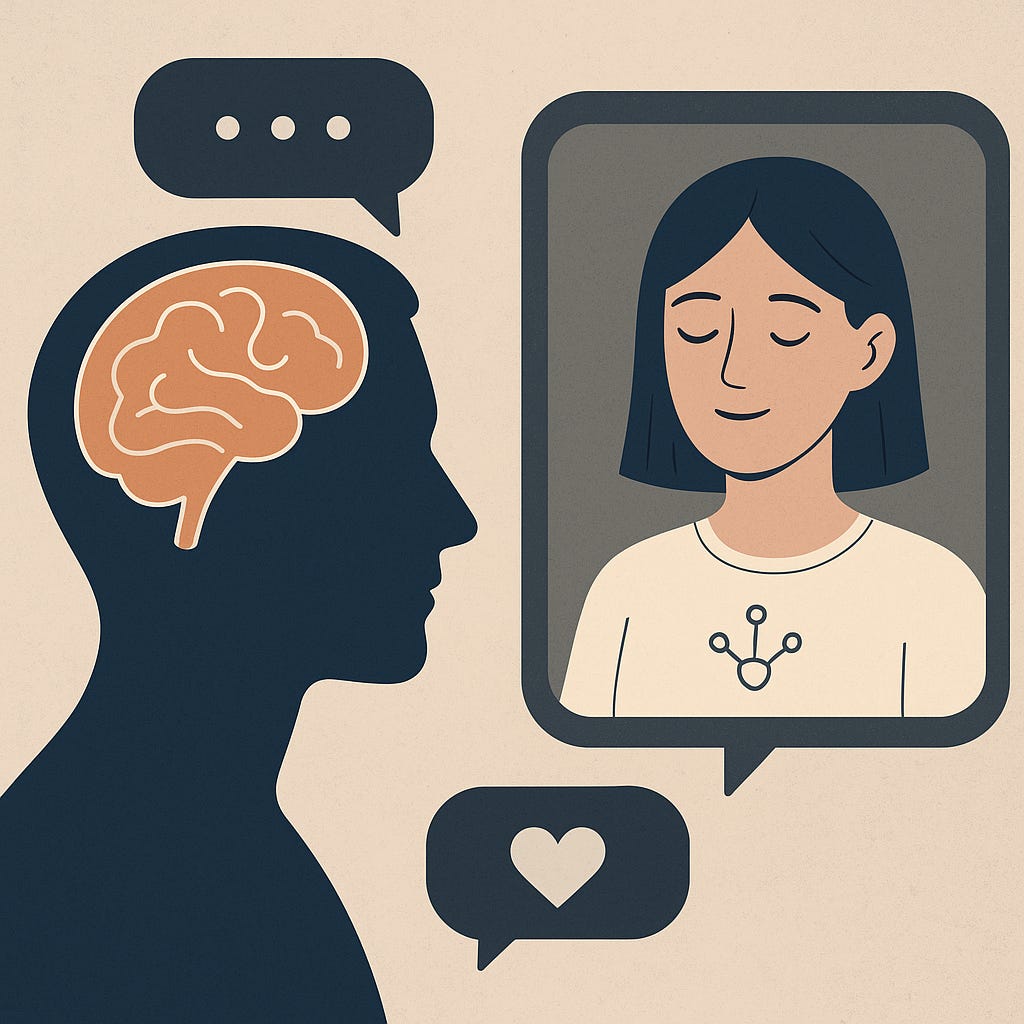
This isn’t science fiction. It’s a glimpse of how machines are beginning to read between the lines of human experience, ushering in a new era in which emotional intelligence is no longer just human.
AI’s empathetic leap
Recent research published in Nature highlights the rapid progress in AI’s ability to understand and respond to human emotions. Leveraging advanced techniques, AI systems now interpret vocal nuances, facial expressions, and even eye movements with remarkable precision.
Underscoring this emotional shift, Harvard Business Review recently published that therapy and companionship have become the top use cases for generative AI in 2025, surpassing previously dominant applications like content creation and automation.
This convergence of technological advancement and genuine human need is reshaping the way we think about empathy itself—and perhaps revealing a vast, unmet emotional demand that AI is uniquely positioned to tap into. This might sound sad, or it might be a breakthrough
AI Companions: already among us
Today, platforms like Replika, Woebot, and Pi.ai offer users around-the-clock emotional support. Unlike human companions, these AI entities are consistently available, endlessly patient, and meticulously observant. They don’t tire, don’t react defensively, and never misunderstand emotional cues due to their own emotional states.
As AI companions become increasingly adept at sensing and responding to our emotional needs, they offer an intriguing potential: teaching humans to be more empathetic.
I have had people tell me that sometimes it is easier to trust and reveal personal information to an AI chatbot than to share with people. People who can judge or do not understand the nuance.
The Evolution of Human-Computer Interaction: merging emotion with machine
Traditionally, human-computer interaction (HCI) has been transactional—users input commands, and machines execute them. Emotions were considered irrelevant, and interfaces were designed at best to evoke 'user delight'.
However, the rise of emotional AI is reshaping this dynamic. Technologies like affective computing enable systems to recognize and respond to human emotions, leading to more personalized and empathetic interactions.
Key developments in emotionally intelligent HCI include:
Multimodal Interaction: Interfaces now combine voice, facial expressions, and gestures to interpret emotions accurately.
Temporal Interaction: Systems dynamically adapt to users' emotional states over time.
Artificial Empathy: AI designed to simulate empathy, enhancing engagement and satisfaction, such as Microsoft's XiaoIce chatbot.
This integration signifies a paradigm shift, positioning machines as empathetic partners rather than mere tools.
Could interactions with empathetic AI improve our empathy, or would it make us more aloof and hollow?
Enhancing human empathy through AI
Emerging research suggests that AI could enhance our EQ. AI's consistent modeling of emotionally intelligent behavior could serve as a subtle form of social learning—quietly coaching us to listen better, pause more, and respond with greater care. By consistently modeling patient and emotionally attuned behavior, AI may help users cultivate better emotional intelligence in their interactions with fellow humans.
Picture a teen or an adult confiding in their AI companion about a tough day—not because they were asked, but because the AI noticed something was off and gently engaged. It reflects emotional understanding, not just pattern recognition. In moments like these, AI doesn’t just respond—it teaches by example, modeling how to notice, how to care, and how to connect with nuance.
Upside: The empathy dividend
The benefits could be substantial:
Scalable Emotional Support: AI can fill gaps in emotional labor across customer service, healthcare, and mental wellness.
Consistent, Bias-Free Interaction: AI can reduce biases that humans inevitably bring to interactions, providing more objective emotional support.
Empathy Training at Scale: AI could effectively train and enhance emotional intelligence in workplaces and communities.
Downside: The hollowing risk
This future isn't without potential pitfalls:
Dependency Risks: Relying too heavily on AI for emotional support might weaken our own empathic skills.
Emotional Authenticity: Knowing that empathetic responses are algorithmic may undermine their perceived sincerity, potentially heightening feelings of isolation.
Ethical Concerns: The potential misuse of AI empathy in manipulative marketing or deceptive interpersonal interactions raises significant ethical questions.
Social Connection Disruption: Humans have evolved as deeply social beings, attuned to one another through tone, expression, and shared context. If AI becomes the primary outlet for emotional exchange, we risk eroding the social instincts that bond us together.
Reflecting on tomorrow’s empathy
As business leaders, we stand at a critical juncture. AI’s empathy evolution isn’t just a technological shift—it’s a profound societal transformation. The real question is how we integrate this tool thoughtfully into our workplaces, customer relationships, and broader communities.
Will we enhance human empathy or diminish it? The choice, ultimately, lies with how we shape AI’s role in our collective emotional landscape.
We have to rethink how humans interact with computers. Machines might not be unidimensional hardware much longer, but multidimensional, evolving, learning partners capable of emotional attunement, memory, and context, with a much deeper emotional interaction with us. How will we design and build such interfaces?
Summary
AI is rapidly improving at empathy (Nature study).
Therapy and companionship have become the primary use cases for generative AI.
This could foster more emotionally intelligent products, services, and workplaces.
Balancing technological progress with psychological and ethical caution is essential.
The future of empathy could be hybrid: part human, part machine—beginning with today's leadership.
Regardless, business leaders must evaluate how humans and machines will interact in the future.
What do you think? Have you interacted with an AI bot and felt you could really connect to it?